How to Know if My Baby Is Lactose Intolerant
By: Anthony Porto, Medico, MPH, FAAP
It can be difficult to know whether your infant or child is having symptoms of lactose intolerance or whether he or she may have a milk allergy.
The following frequently asked questions from parents will assistance you lot learn more about the common symptoms of lactose intolerance, diagnosis, and treatment options.
Is lactose intolerance the same thing as a milk allergy?
No. Many parents confuse the terms lactose intolerance and milk allergy . While they may share similar symptoms, they are entirely dissimilar conditions. Lactose intolerance is a digestive problem, while milk allergy involves the immune system. And so, while lactose intolerance can cause a bang-up deal of discomfort, it will non produce a life-threatening reaction such as anaphylaxis.
Milk allergies tend to appear inside the starting time year of life, while an infant'due south digestive system is all the same quite immature. Lactose intolerance can start in childhood into boyhood and can become more noticeable into machismo.
What is lactose?
Lactose is a sugar found in foods that many children love—milk and dairy products, such as frozen yogurt and cheeses. The list of other foods containing lactose is long and includes some breads, cereals, and frozen or canned foods.
Lactose is broken down by the lactase enzyme located in the small intestine—the organ where almost food digestion and nutrient absorption takes place. When we eat lactose, lactase breaks lactose down into ii simple sugars: glucose and galactose. The body then absorbs these simple sugars into our intestines. When there is a subtract or loss of the lactase enzyme, nosotros cannot break down or absorb lactose. The unabsorbed lactose can atomic number 82 to symptoms, which is called an intolerance.
In addition to milk, what other nutrient products contain lactose?
Lactose is nowadays in many food products and in some medications. Manufacturers also often add milk and milk products to boxed, canned, frozen, packaged, and prepared foods. People who have digestive symptoms later on consuming a small quantity of lactose should exist aware of the many food products that may contain even minor amounts of lactose.
You tin can check the ingredients on nutrient labels and the diet facts to detect possible sources of lactose in food products. If a nutrient label includes whatever of the following words, the product contains lactose:
-
Milk
-
Lactose
-
Whey
-
Curds
-
Milk by-products
-
Dry milk solids
-
Nonfat dry out milk pulverisation
What are some key symptoms of lactose intolerance?
The symptoms of lactose intolerance depend on the corporeality of lactose that's consumed. The more lactose your child consumes, the more symptoms he or she will experience. Symptoms of lactose intolerance tin occur within minutes to hours after drinking milk or eating dairy products and range from balmy to severe based on the corporeality consumed and the amount tolerated. Hither are symptoms you should expect out for:
-
Nausea
-
Abdominal pain, cramping, and bloating
-
Loose stools and gas
-
Watery diarrhea with gas
If I think my kid might exist lactose intolerant. How tin I tell?
One way to check if your kid has problem digesting lactose is to take all the milk products out of your kid's nutrition for two weeks and to then see if his or her symptoms improve. After two weeks, slowly reintroduce the products in small amounts each day to see if symptoms return. Your pediatrician can also test your child for lactose intolerance with a hydrogen breath test.
I've heard lactose intolerance tin can sometimes be a temporary side upshot when kids are sick. Is that true?
Yeah. Lactose intolerance can occur temporarily in children after a viral infection (that is why you may exist told to avoid milk with lactose in it during a stomach bug) or it may be seen with conditions that lead to inflammation of the intestines, such as celiac affliction.
Tin infants be lactose intolerant?
Lactose intolerance is actually not very common in infants and typically only starts showing up after historic period iii in children who were born total-term. All babies are born with lactase in their intestines. As they grow older, the lactase enzyme decreases.
-
Babies who were born premature are more likely to have a type of lactose intolerance chosen developmental lactase deficiency. This condition usually lasts just for a brusk fourth dimension after birth. However, the majority of premature infants volition exist able to swallow lactose-containing formula and breast milk.
-
Congenital lactase deficiency is a very rare disorder in which babies tin't break downwards the lactose in breast milk or formula. Genes inherited from parents crusade this disorder. This type of intolerance results in severe diarrhea, and if not fed a lactose-free babe formula, those babies could develop severe aridity and weight loss.
If a mother is lactose intolerant, is it condom for her to breastfeed her baby?
It's perfectly condom to breastfeed your child if you're lactose intolerant. Breastfeeding does not put your babe at greater risk of condign lactose intolerant, and it has of import health benefits for your babe.
How can my child get plenty calcium in her diet if milk or lactose are reduced?
If your child has lactose intolerance, he or she can still eat lactose-free dairy products including lactose-free milk, cheese, and yogurts—all are adept sources of calcium. In addition, your child can become calcium from dark green leafy vegetables such as spinach, broccoli and kale, nuts (almonds), beans (white beans), fish (sardines, salmon) and calcium-fortified orange juice. If yous feel your child is not getting plenty calcium, talk with your pediatrician near starting a calcium supplement.
Are soy or almond milks acceptable substitutes for children who are lactose intolerant?
There are many milk substitutes that a child with lactose intolerance can drink, including soy, almond, rice, hemp, and oat milk. Soy milk is a popular milk alternative, because it is a skilful source of calcium and protein. Almond milk has too become a popular culling and is safe for children with lactose intolerance or a cow'southward milk protein allergy. Although almond is a good source of calcium, it is lower in protein and contains fewer calories than cow'south milk. Before starting any alternative milks, it is of import to talk with your pediatrician about which may be all-time for your child.
How is lactose intolerance diagnosed?
Your pediatrician will take a medical, family, and diet history to assist diagnose lactose intolerance in your infant or child. During this discussion, he or she will review your child'due south symptoms with you.
-
In some cases, a hydrogen jiff examination is done to test for lactose intolerance. For the examination, your child breathes into a container that measures breath hydrogen level before and after he or she drinks a potable that contains a known amount of lactose. Normally, but a small amount of hydrogen is detectable in the jiff when a person eats or drinks and digests lactose. An increase in hydrogen levels is considered a positive test for lactose intolerance.
-
Pediatricians check acerbity in the stools of infants and young children who may be unable to properly exercise the hydrogen breath examination. Acidic stool (low pH) may signal lactose malabsorption. Another stool test (reducing substances) looks for the presence of glucose in the stool, which signifies undigested lactose.
-
If your child's symptoms persist, he or she may be referred to a pediatric gastroenterologist (GI) for farther evaluation. Depending on the severity of your kid's symptoms, the GI may perform an endoscopy to measure out lactase levels directly from the intestine. This is done with a biopsy.
How much calcium and vitamin D are recommended for my child to eat each solar day?
The specific amount is based on your kid's historic period. Hither is a breakdown of the Recommended Dietary Allowances (RDA) for calcium and vitamin D.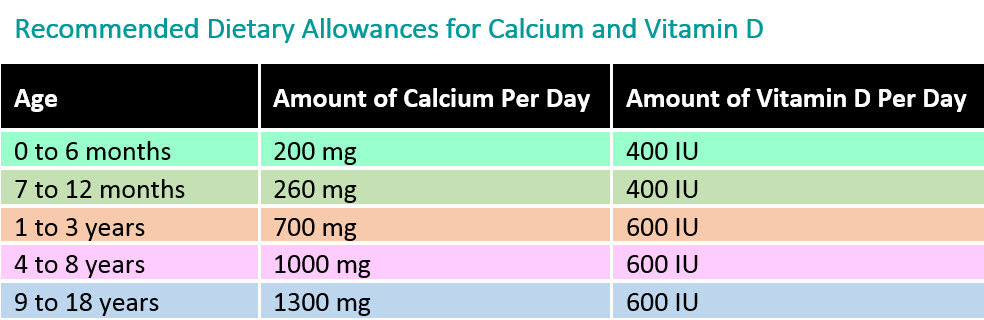
How is lactose intolerance treated?
How lactose intolerance is treated depends on the extent of your child's symptoms. Some children with lactose intolerance may be able to have modest amounts of dairy products without having symptoms.
-
To help alleviate symptoms if/when your child consumes lactose-containing food, your pediatrician may recommend an over-the-counter lactase enzyme supplement.
-
If your child's symptoms are astringent and warrant removing all lactose from his or her diet, your pediatrician may refer your kid to a registered dietitian. Since dairy is a good source of calcium and vitamin D—which all kids demand—a registered dietitian can suggest other foods to provide those nutrients and may suggest vitamin supplements.
Is lactose intolerance a lifelong condition?
In some cases, lactose intolerance is temporary—if lactose intolerance develops after a viral illness or if information technology is associated with other conditions, like celiac illness. For example, once celiac disease is treated, lactase levels tin become in the normal range and lactose may be tolerated in the diet. More than than likely, however, lactose intolerance is long-term and requires many older children and adults to change their diet to avert symptoms.
Additional Data & Resources:
-
Vitamin D: On the Double
-
Milk Allergy
-
Infant Allergies and Food Sensitivities
-
Lactose Intolerance in Infants, Children and Adolescents (AAP Clinical Study)
Near Dr. Porto:
 Anthony Porto, Md, MPH, FAAP is a board certified pediatrician and board certified pediatric gastroenterologist. He is an Acquaintance Professor of Pediatrics and Associate Clinical Chief of Pediatric Gastroenterology at Yale Academy and Director, Pediatric Gastroenterology at Greenwich Hospital in Greenwich, CT. He is also the medical director of the Yale Pediatric Celiac Plan. Within the American Academy of Pediatrics, Dr. Porto sits on the PREP Gastroenterology Advisory Board and is a fellow member of the Section on Gastroenterology, Hepatology and Nutrition. He is as well a member of the North American Society of Pediatric Gastroenterology, Hepatology and Nutrition's Public Education Commission, a pediatric good on nutrition for The Bump'southward Real Answers, and is the co-writer ofThe Pediatrician's Guide to Feeding Babies and Toddlers. Follow him on Instagram @Pediatriciansguide.
The information independent on this Web site should not be used equally a substitute for the medical care and advice of your pediatrician. There may be variations in treatment that your pediatrician may recommend based on individual facts and circumstances.
Source: https://www.healthychildren.org/English/healthy-living/nutrition/Pages/Lactose-Intolerance-in-Children.aspx
0 Response to "How to Know if My Baby Is Lactose Intolerant"
Post a Comment